By Michael Christov
specialist in Nutrition and Dietetics
The paramount significance of proteins in all processes and forms of life led to the conviction that proteins are the major carrier of life. The unique role and importance of proteins for any organism's functions, development, and growth, is reflected in the very name they were given: "proteins" (from Greek "proteios - primary, most important). Together with fats, carbohydrates and water, proteins are considered macronutrients (essential nutrients). Proteins can be replaced by neither fats nor carbohydrates as these contain no organic nitrogen which is of primary importance to living matter.
Biological Functions of Proteins
- Structural function. This is the basic function of proteins. Proteins provide the primary building material needed for the growth, development and regeneration of cells and tissues, intracellular structures, and intercellular matter. Proteins make up for 18-21% of the human body's net mass and about 85 % of the dry matter in tissues and organs. Together with phospholipids (lecithine being their major representative) they are part of the structuring of biological membranes.
- Catalytic function. Proteins are a major component of all enzymes which play the role of biocatalysts in metabolism. Moreover, simple enzymes are made of protein substances only, and complex enzymes are made up of a protein molecule and a coenzyme.
- Hormonal function. Proteins are at the very base of endocrine functions (the functions of internal secretion glands). The majority of hormones (insulin, hypophyseal, thyroid and parathyroid) constitute proteins and polypeptides.
- Transport function. Proteins connect and transport various elements and substances in blood: oxygen (haemoglobin), fats (lipoproteins), carbohydrates (glycoproteins), metals (transferin etc.), vitamins, hormones, pigments, microelements etc.
- Protective function. Proteins take an active part in the build-up of immune bodies. The specificity of tissues and types, which is at the base of immunity and allergies, is also closely related to proteins. Proteins increase an organism's resistance to various infectious and toxic substances, and also to stress situations, neuro-psychological tension etc.
- Energy function. Some proteins are subject to biological oxidation and are used to satisfy energy needs. They contribute about 10-15% of the total energy intake. During the oxidizing decomposition of 1g of protein, 17.48) kJ (4kcal) of energy is released. The use of proteins as a source of energy is considerably increased at times of insufficient intake of other energy sources such as carbohydrates and fats (particularly during starvation / malnutrition), and also in case of protein surpluses.
Proteins in the human organism are strongly dynamic structures - they are continually replaced and therefore they should be constantly replenished in the form of food. The human body has virtually no protein reserves while fats and carbohydrates cannot substitute proteins or serve as protein precursors. Therefore the intake of proteins with food is the only way to refill the amino-acid composition of the organism and ensure a balance between the processes of synthesis and decomposition of proteins. A condition of so called "nitrogen balance" is usually observed in healthy adults. Nitrogen balance may be positive: this is observed in children and adolescents, pregnant and nursing women, during recuperation from a disease, in the presence of accelerated protein anabolism processes (assimilation). A negative nitrogen balance occurs in case of low-protein or low-energy food intake (particularly during complete or partial starvation), the impaired resorption of proteins due to a disease of the digestive system, or intensified decomposition processes in the organism (as a result of massive burns, tuberculosis, tumours).
Protein Digestibility
Protein substances taken with the food are decomposed in the small intestines and reduced to amino acids which are their basic componentс (α-amino acids). In this form, they are resorbed through the mucous membrane of the small intestines and - along with the amino acids formed as part of the decomposition of the body's own proteins - they establish a set of amino acids needed for the synthesis of body proteins. The process of resorption and assimilation of proteins is rather complex and depends on a number of factors - the composition of food intake, the proportion of amino acids, the way the food was cooked etc. Protein digestibility varies between 75 and 98% for different foods.
Protein Composition
Chemically, proteins constitute complex polymer compositions whose molecule consists of polypeptide chains of α-amino acids. Of the over 80 naturally occurring amino acids, 22 are important to humans as they form various foodstuffs. These are alanine, arginine, asparagine, aspartic acid, cystine, cysteine, glutamine, glutamic acid, glycine, histidine, leucine, isoleucine, lysine, methionine, phenylalanine, proline, oxyproline, serine, threonine, tryptophan, tyrosine and valine.
Depending on whether or not they can be produced by the human organism (in the presence of organic nitrogen), amino acids are divided into two types: dispensable (non-essential) and indispensable (essential). Eight amino acids cannot be synthesized in the human organism and must therefore be introduced with the food intake: lysine, valine, leucine, isoleucine, threonine, tryptophan, methionine and phenylalanine. The amino acid histidine must also be taken with food in the case of infants and young children.
The Biologic Value of Proteins
In order to produce its specific “own proteins”, the human organism needs both non-essential and essential amino acids equally. The absence or deficit of even a single essential amino acid restricts the use of all remaining amino acids needed for protein synthesis and thus brings down protein digestibility. Moreover, not only the quantity of amino acids introduced with food is of significance, but also their proportion: in each food intake, their proportion must be close to the proportion of the body's own proteins.
The biologic value of proteins - established by the content of essential amino acids and the digestibility of these proteins as a whole - determines the level of importance of different proteins for the human body. It may be evaluated by means of chemical or biological methods. Based on this assessment, food proteins can be classified according to their relative usefulness to the human body.
The "amino acid score" method is most frequently applied to establish the protein value. Under this method, the amino acid content of the studied protein is compared to that of a protein established as a standard of reference. Such reference proteins are usually human (woman's) milk and the protein of chicken eggs (mixture of yolk and white).
The biologic value of a food protein is established by the amino acid with the highest deficit (also called the "limiting" amino acid).
The protein which contains all essential amino acids in the necessary quantities and proportions is biologically complete. The absence or deficit of even a single essential amino acid makes the protein incomplete.
The diet of a large portion of the Earth's population features a deficit of three essential amino acids - lysine, methionine and tryptophan due to the significant share of foods of plant origin in these people’s diet; such foods contain the above amino acids only in very small quantities.
*The essential amino acids balance is optimal in the protein of human (breast) milk and that of the chicken egg (mixed yolk and white) and these have been accepted as a standard of reference for a biologically complete ("perfect") protein. The digestibility of these proteins reaches 96%.
Being aware of the biological value of proteins in various foodstuffs allows for their proper selection and combination.
Sources of Protein
The protein sources for humans are foods of animal and plant origin (Table 1.).
Table 1. Protein content in some of the most common foodstuffs (g per 100g edible portion)
|
Product
|
Protein
|
|
Cow’s milk whole (raw milk)
|
3.3
|
|
Yoghurt (min.3.5% fat cont.)
|
3.8
|
|
Curd (from skimmilk)
|
17.2
|
|
White cheese in brine
|
16.9-17.1
|
|
Yellow cheese
|
24.4-25.8
|
|
Chicken egg
|
12.5-13.3
|
|
Tuna
|
18.0-24.0
|
|
Mackerel
|
17.2-20.1
|
|
Herring (Atlantic)
|
17.3-19.6
|
|
Salmon
|
17.4-21.1
|
|
Sardine
|
16.4-21.2
|
|
Sardines in oil
|
23.0-25.7
|
|
Trout
|
18.0-20.2
|
|
Carp
|
16.7-19.3
|
|
Caviar
|
25.4-26.9
|
|
Chicken (breast with skin)
|
22.2
|
|
Turkey (breast without skin
|
22.4-25.2
|
|
Pheasant
|
22.7-24.8
|
|
Lamb (muscles only)
|
20.8
|
|
Veal (muscles only)
|
21.3
|
|
Soya bean
|
37.6
|
|
Bean (dry), Lentil, Pea
|
20.0-26.1
|
|
Chick pea
|
13.0-24.9
|
|
Pea (pod and seed, green)
|
5.9-7.4
|
|
French beans (string beans)
|
2.0-3.0
|
|
Peanut
|
29.8
|
|
Walnut
|
17.0
|
|
Almond
|
22.1
|
|
Hazelnut
|
14.1
|
|
Amaranth (seed)
|
14.5
|
|
Linseed
|
28.8
|
|
Pumpkin seed
|
32.4
|
|
Sunflower
|
26.5
|
|
Oriental sesame
|
20.9
|
|
Poppy seed
|
23.8
|
|
Rolled oats
|
13.5
|
|
Mushroom
|
4.1
|
|
Tofu (soybean curd)
|
5.0-12.9
|
|
Rice (unpolished)
|
7.8
|
|
Wheat (whole grain)
|
11.7
|
|
Wheat germ
|
28.7
|
|
Wheat bran
|
16.0
|
|
Wheat flour (type 1700)
|
12.1
|
|
Wheat bread
|
6.7-9.0
|
|
Pasta
|
10.8-12.6
|
|
Maize (whole grain)
|
11.2
|
|
Potato
|
1.4-2.9
|
|
Fruits (fresh)
|
0.3-1.2
|
|
Compotes
|
0.2-0.6
|
|
Bee honey
|
0.3-0.5
|
“Biologically complete” are the proteins containing all essential amino acids in balanced proportions - these are the proteins of eggs, milk and dairy products, meat, fish, fruit, grain amaranth, quinoa.
It is worth noting, however, that not all proteins of animal origin are complete as a rule. For example collagen and elastine - proteins which make up the connective tissue - have very low biological value because they contain no tryptophan and have low phenylalanine content.
Most foods of plant origin have inadequate low content of one, and some - even two or three essential amino acids. Exceptions to this are some leguminous crops (beans, gram, peas, soy), nuts (walnuts, almonds, hazelnuts, peanuts), grain amaranth, quinoa. Cereals, flour, bread and bakery products have a relative lysine deficit (rice has threonine deficit), maize has tryptophan and lysine deficit, potatoes and some of pulse crops lack methionine and cysteine.
Proteins of plant origin are not absorbed by the body as well as those of animal origin. This is because of the cellulose, hemicellulose and lignin content which reduces the digestibility of other food ingredients (particularly calcium, zinc, iron etc.).
As was already mentioned above, wheat proteins do not contain sufficient quantities of lysine and therefore bread is not a source of complete proteins for the human body. It however remains an important protein source because of its prominent (if not fundamental) position in Bulgarian people's diet.
A meal or a menu of complete proteins can be achieved by combining two incomplete but mutually complementary proteins. (For example combining wheat foods with pulse crops, dairy products etc.)
It is important to note that the quantity and the quality of proteins determine the overall quality of one's diet. Animal proteins ensure the optimal amino acid balance and plant proteins provide the crucially important nitrogen.
Protein Intake Disbalance
In case of continuous protein deficiency in food, the protein balance of the body is disturbed thus causing adverse changes:
- Protein catabolism (dissimilation, decomposition) is enhanced to satisfy energy needs which results in a negative nitrogen balance (reduced body weight, slow-down in growth). It is worth noting that tissues and organs reproducing the fastest are the first to bear the harmful impact: these are the blood system, liver, the small intestines’ mucous membrane, fetus-forming tissues and other organs and tissues featuring faster protein renewal rates.
- An atrophy of the intestinal mucosal surface sets in, thereby also reducing the synthesis of digestive enzymes. This results in the deteriorated decomposition and resorption of protein substances from the food intake which is already insufficient. The additionally reduced quantity of absorbed protein substances deteriorates the absorption of all foods (including proteins). This vicious circle is observed in the Protein-Energy Malnutrition syndrome - kwashiorkor and marasmus, - very common in some countries in Asia, Africa and Latin America, where the food intake of the local people is dominated by plant proteins and carbohydrates.
- In the case of heavy protein deficiency, the biosynthesis of immune proteins is considerably deteriorated which leads to the reduced resistance of the organism to all sorts of diseases - infectious, parasitic etc. The body becomes, too, more susceptible to adverse factors of the environment - hypothermia, industrial poisons etc. This is one of the earliest manifestations of protein deficiency.
- Metabolic processes are disturbed; the intensity of the basic metabolism and the generation of heat are reduced etc.
- The assimilation of iron and vitamins В1, В2, В6, В12, С, РР (niacine), folic acid is deteriorated etc. This results in impaired biosynthesis of protein in the bone marrow and causes anemia. The reason behind this so-called food-related anemia is the deficiency of proteins - and mostly those of animal origin. In such cases there is a very real danger of developing pernicious anemia (B12 avitaminosis).
- A fatty degeneration of the liver occurs - its volume decreases and its functions deteriorate. It has been scientifically established that the protein-poor diet with insufficient quantities of metionine and holine results in the development of hepatic steatosis, which could progress to cirrhosis.
- The functions of the pancreas and internal secretion glands are impaired. Protein deficiency is seen as a very probable reason for developing chronic pancreatitis.
- The reproductive function isalso impaired.
- The volume and strength of skeletal muscles are reduced.
- Serious dysfunctions appear in the central nervous system.
- Mental development is slowed down.
The earliest sign of protein deficit is the reduced capacity for mental work.
Protein deficiency is most hazardous to children and adolescents.
In case of protein over-nourishment the organism also suffers adverse consequences. As compared to carbohydrates and fat surpluses, the surplus of proteins is more difficult to cope with because of their higher reactivity.
- Above all, it impedes digestion and the putrefactive processes in intestines can be enhancedwith the accumulation of toxic products (phenol, indol, skatol etc.).
- The liver is overworked because of the enormous quantity of intermediate protein metabolism products.
- Secretory organs and, above all, kidneys are burdened due to the enhanced production and secretion of toxic end-products of protein metabolism.
- Metabolism is impeded. The continuous surplus of proteins in the food can result in metabolic acidosis. The metabolism of vitamins is disturbed.
- The excitability of the central nervous system and the internal secretion glands increases.
The systematic overeating of meat, particularly meat by-products (viscera) can disturb the metabolism of purines and lead to podagra. The over-consumption of meat (especially beef) and dairy products is attributed by some to colon cancer, breast cancer and prostate cancer.
The maximum values of protein needs are unfortunately not very clear yet.
Young children and the elderly are most susceptible to the consequences of protein overeating.
Protein Needs of the Human Body
They depend on age, sex, body weight, physical activity, characteristics of the type of work, physiological condition (pregnancy and nursing) etc. With the increase in energy use, the relative share of proteins in the daily food intake is also increased.
In compliance with WHO recommendations, the relative share of energy (E%) to proteins must be 10-15% of the total energy intake. Under 10 E %, there occurs a risk of protein deficiency.
Dietary Reference Intakes (DRIs) of Proteins are provided in Table 2.
Table 2. Dietary Reference Intakes (DRIs) of Proteins (Extract from "Physiological Norms of Nutrition of the Bulgarian Population")
|
Category
|
Age
/years/
|
Sex
|
Protein
/g/
|
|
Breastfeeding
babies
|
up to 3 months
3-6 months
6 m-1 yr
|
m, f
m, f
m, f
|
12
13
17
|
|
Childrenand
adolescents
|
1-3
3-6
6-10
10-14
14-18
10-14
14-18
|
m, f
m, f
m, f
m
f
|
17
23
30
47
64
46
53
|
|
Adults
|
18-30
30-60
60-75
over 75
|
m
|
65
66
63
61
|
|
Adults
|
18-30
30-60
60-75
over 75
|
f
|
54
55
53
51
|
|
Expectant
mothers
|
I trimester
II and III trim.
|
|
+7
+12
|
|
Nursing
mothers
|
I and II trim.
III trim.
|
|
+18
+13
|
The Dietary Reference Intakes must be interpreted as the minimum daily intake of proteins of mixed origin. The optimal quantity of proteins in the food taken by people in active working age, depending on the level of energy consumption, is between 66 and 100 g, and for children and adolescents - between 41 g (1-3 yrs.) and 91 g (boys 14 to 19 yrs of age) The specific values given in g/d (grams per day) are provided in Table 3.
Table 3. Recommended energy and nutritious substances intake (Extract from "Physiological Norms of Nutrition of the Bulgarian Population")
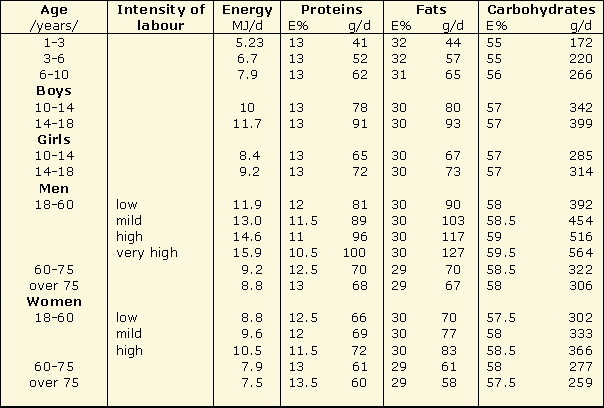
To ensure the required completeness of food proteins, it is necessary to provide a proper proportion of proteins of animal and plant origin in one's diet. For adolescents and adults, the share of animal proteins is recommended at about 50%, while for children - due to the higher protein needs during the growth period - it is between 60% (3-13 yrs.) and 70 % (1-3 yrs.) And last but not least, the diversity of food products in the diet is of major significance for ensuring a person’s wholesome protein nutrition.